

Ayush Bagwari
Hi, I'm the CEO & Founder of Outreach Empress. I help brands and SEO agencies get better organic rankings with our link building services.
Backlink exchange remains one of the most accessible link-building strategies available today. When done right, it builds domain authority, drives targeted traffic, and establishes valuable industry relationships. When done poorly, it triggers Google penalties and damages your rankings.
This comprehensive guide reveals everything you need to know about backlink exchange in 2026. You’ll learn the difference between safe and risky exchanges, master both reciprocal and ABC methods, and understand exactly when Google considers link swapping natural versus manipulative.
What Is Backlink Exchange?
Backlink exchange is a link-building strategy where two or more websites agree to link to each other’s content. The concept is simple: each site gains a backlink, theoretically improving both sites’ authority and search rankings.
However, backlink exchange exists on a spectrum from completely natural to obviously manipulative. Understanding where your exchanges fall determines whether they help or hurt your SEO.
Natural Exchange: Two relevant websites in related niches establish a genuine relationship and reference each other because it provides value to their audiences.
Manipulative Exchange: Two unrelated websites swap links solely to manipulate rankings, with no consideration for relevance or user value.
Google’s algorithms distinguish between these scenarios. Your goal is ensuring exchanges consistently appear natural and valuable.
Why Backlink Exchange Still Works?
According to recent surveys, 51.6% of U.S. digital marketers actively use link exchanges, ranking just below guest posting (64.9%) and content creation (50%) in popularity.
Key Benefits
| Benefit | Description | Real Impact |
|---|---|---|
| Authority Boost | Links from relevant high-quality sites improve domain authority | Better rankings for target keywords |
| Targeted Traffic | Well-placed links drive pre-qualified visitors | Higher conversion rates than cold traffic |
| Relationship Building | Exchanges evolve into long-term partnerships | Guest posts, collaborations, referrals |
| Cost Effectiveness | Requires time investment, not direct payment | Accessible for bootstrapped businesses |
Right Way to Execute Backlink Exchange
1. Prioritize Topical Relevance
The most important factor is topical relevance. Exchange partners should operate in related industries or serve similar audiences. You can hire link-building agencies like Outreach Empress, which can help you in your backlink campaigns and choosing the most relevant websites.
Good Relevance Examples:
| Your Site | Ideal Exchange Partner | Why It Works |
|---|---|---|
| Project management software | Remote work productivity blog | Same target audience |
| E-commerce platform | Digital marketing agency | Complementary services |
| Fitness equipment retailer | Nutrition and wellness blog | Related health niche |
| B2B SaaS tool | Business optimization consultant | Industry overlap |
Bad Relevance Examples:
- Technology blog ↔ Dental practice
- Fashion e-commerce ↔ Industrial equipment
- Marketing agency ↔ Plumbing services
2. Evaluate Partner Quality
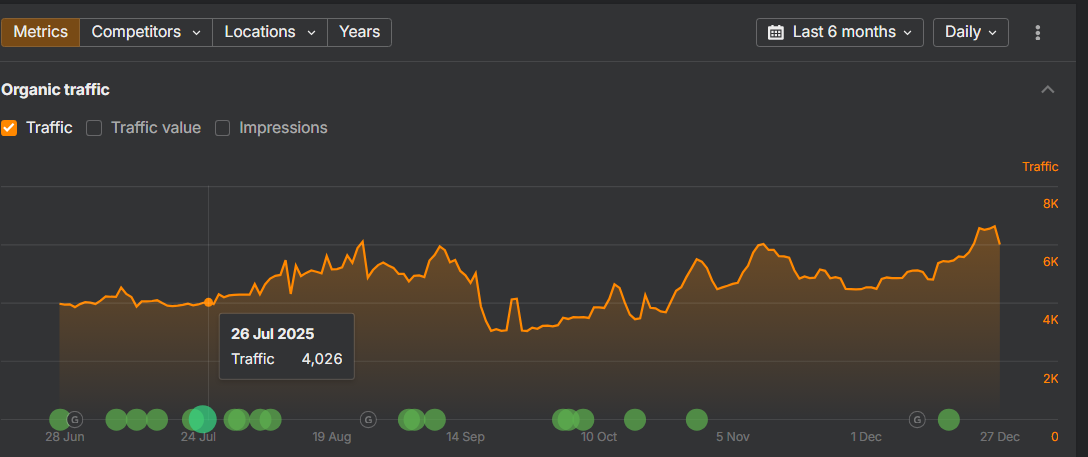
Before committing to exchanges, assess potential partners across multiple dimensions:
| Metric | Good Range | Warning Signs | Tool to Check |
|---|---|---|---|
| Domain Authority | 30+ (comparable to yours) | Below 20 or declining | Moz, Ahrefs |
| Spam Score | Below 30% | Above 40% | Moz Link Explorer |
| Organic Traffic | 1,000+ monthly visits | Zero or declining | Semrush, SimilarWeb |
| Content Quality | Regular publishing, 1000+ words | Thin content, no updates | Manual review |
| Backlink Profile | Natural, diverse sources | Obvious link schemes | Ahrefs, Majestic |
3. Maintain Natural Anchor Text
Natural link profiles contain diverse anchor text. Avoid over-optimization.
Healthy Anchor Text Distribution:
| Anchor Type | Percentage | Examples |
|---|---|---|
| Branded | 40-50% | “YourCompany,” “YourBrand” |
| Naked URL | 20-30% | “yourdomain.com” |
| Generic | 15-25% | “click here,” “this article,” “learn more” |
| Partial Match | 5-15% | “YourBrand SEO tools” |
| Exact Match | 5-10% | “project management software” |
Warning Signs:
- 60%+ exact match commercial keywords
- Multiple exchanges using identical anchor text
- Zero branded or generic anchors
4. Diversify Your Strategy
Keep exchanges to 30-40% or less of your total backlink profile.
Ideal Link Profile Mix:
| Link Type | Percentage | Purpose |
|---|---|---|
| Reciprocal Exchanges | 15-25% | Strategic partnerships |
| ABC Exchanges | 10-15% | Natural-looking swaps |
| Guest Posts | 20-30% | Editorial authority |
| Earned Editorial Links | 30-40% | Natural authority signals |
| Other Sources | 10-20% | Directories, citations |
5. Practice Transparent Communication
Weak Outreach:
“Hi, I love your blog! I just added a link to you. Would you mind linking back?”
Strong Outreach:
“Hi [Name], I run a blog about [your topic] and found your article on [their topic] excellent. Our audiences overlap significantly—would you be interested in exploring a link exchange or ABC arrangement? Happy to discuss what works best for both of us.”
ABC Link Exchange: The Strategic Alternative
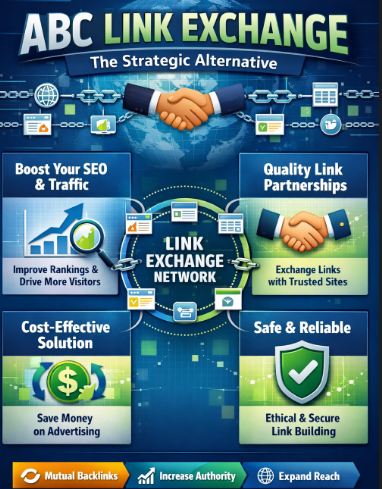
ABC exchanges involve three parties, avoiding direct reciprocation patterns.
How It Works?
| Site | Links To | Receives Link From |
|---|---|---|
| Site A | Site B | Site C |
| Site B | Site C | Site A |
| Site C | Site A | Site B |
Why ABC Is Safer?
- No direct reciprocation footprint
- Appears more natural to algorithms
- Harder for Google to identify as manipulation
- Still provides backlink value to all parties
When to Use ABC?
| Use ABC When | Use Reciprocal When |
|---|---|
| You have multiple sites or client sites | You’re working with single-site partners |
| You’re scaling exchanges systematically | You’re building close one-on-one relationships |
| Partners prefer non-reciprocal appearance | Both parties are comfortable with direct swaps |
| You’re in a trusted network | You’re establishing new partnerships |
Recognizing Risky Exchange Practices
Red Flags to Avoid
| Red Flag | Why It’s Dangerous | What to Do Instead |
|---|---|---|
| Link Farms/PBNs | Network penalties affect all connected sites | Vet partners individually |
| Irrelevant Niches | Creates obvious manipulation signals | Only exchange with related industries |
| Excessive Reciprocation | 70%+ reciprocal links trigger flags | Maintain diverse link profile |
| Sitewide Links | Hundreds of identical links from one domain | Request contextual placement only |
| Velocity Spikes | 50+ backlinks in one week looks unnatural | Space exchanges over weeks/months |
What Google Says About Link Exchange?
Official Guidelines
Google’s Webmaster Guidelines state: “Excessive link exchanges or partner pages exclusively for cross-linking” violate guidelines.
Key word: “excessive.” Google permits natural, limited exchanges between related sites.
Expert Perspectives
| Google Representative | Key Message |
|---|---|
| Matt Cutts (Former Head of Webspam) | Small-scale relevant exchanges acceptable; large-scale manipulation problematic |
| John Mueller (Search Advocate) | Algorithms ignore obvious manipulation; penalties for clear link schemes |
The Reality
Google’s algorithms identify:
- Obvious reciprocal relationships
- Link networks and patterns
- Unnatural anchor text distribution
- Relevance between exchanging sites
- Velocity spikes from exchange campaigns
Focus on appearing natural and providing user value to avoid issues.
Building a Sustainable Exchange Strategy
Step-by-Step Implementation
| Phase | Actions | Timeline |
|---|---|---|
| 1. Prospecting | Analyze competitor backlinks, identify relevant sites | Week 1-2 |
| 2. Vetting | Check DA, spam score, traffic, content quality | Week 2-3 |
| 3. Outreach | Send personalized pitches to top prospects | Week 3-4 |
| 4. Negotiation | Discuss anchor text, placement, timing | Week 4-5 |
| 5. Implementation | Place links, verify proper implementation | Week 5-6 |
| 6. Monitoring | Set up alerts, track link status | Ongoing |
Partnership Tiers
| Tier | Domain Authority | Effort Level | Percentage of Portfolio |
|---|---|---|---|
| Tier 1 Premium | 60+ | High (personalized outreach) | 15-20% |
| Tier 2 Quality | 30-60 | Medium (template with personalization) | 50-60% |
| Tier 3 Developing | 20-30 | Low (standard templates) | 20-30% |
Monitoring Schedule
| Frequency | Activities | Tools |
|---|---|---|
| Weekly | Check new/lost backlinks, follow up on disappeared links | Ahrefs, Semrush |
| Monthly | Review partner DA/spam score changes, verify top partnerships | Moz, Linkody |
| Quarterly | Full profile audit, identify declining partners | Google Search Console |
| Annually | Strategic review, ROI assessment, strategy adjustment | Analytics, rank tracking |
Essential Tools for Backlink Exchange
Comprehensive SEO Platforms
| Tool | Starting Price | Best For | Key Features |
|---|---|---|---|
| Ahrefs | $129/month | Comprehensive data | Massive backlink index, batch analysis |
| Semrush | $130/month | Integrated tracking | Backlink audit, position tracking |
| Moz Pro | $99/month | Quick assessment | Domain Authority, Spam Score |
| Majestic | $50/month | Quality metrics | Trust Flow, Citation Flow |
Dedicated Monitoring
| Tool | Starting Price | Best For | Key Features |
|---|---|---|---|
| Linkody | $14.90/month | Link monitoring | Instant alerts, disavow generator |
| Monitor Backlinks | $25/month | Quality tracking | Daily checks, quality scores |
Why Hiring a Link Building Agency Makes Sense in 2026?
Finding relevant partners, vetting quality metrics, negotiating placements, maintaining natural anchor diversity, spacing links over time, and monitoring removals requires significant expertise and ongoing effort. One wrong move—irrelevant sites, excessive reciprocity, or poor link velocity—can undo months of SEO progress.
That’s why many successful brands choose to work with a professional link building agency instead of managing exchanges themselves.
| Factor | DIY Backlink Exchange | Link Building Agency |
|---|---|---|
| Partner Discovery | Manual search, inconsistent quality | Pre-vetted niche-relevant sites |
| Risk Management | High risk of Google penalties | Algorithm-safe strategies |
| Time Investment | 20–40 hours/month | Minimal client involvement |
| Scalability | Hard to scale safely | Built for long-term growth |
| Anchor Text Control | Often over-optimized | Strategically diversified |
| Monitoring & Audits | Manual or inconsistent | Continuous link monitoring |
The Hidden Challenges of DIY Backlink Exchange
| Stage | Common DIY Mistake | SEO Impact |
|---|---|---|
| Prospecting | Poor topical relevance | Weak or toxic links |
| Vetting | Ignoring spam score & traffic | Algorithmic devaluation |
| Outreach | Generic email templates | Low response rate |
| Placement | Sitewide or footer links | Unnatural link signals |
| Scaling | Rapid link velocity | Manual review risk |
| Monitoring | Missing lost/changed links | Authority erosion |
While backlink exchange is cost-effective in theory, in practice it comes with real risks:
Time-intensive prospecting: Identifying high-quality, relevant partners can take dozens of hours
High risk of mistakes: Poor relevance, weak domains, or obvious patterns can trigger Google penalties
Scaling difficulties: Managing multiple exchanges without leaving a footprint is complex
Ongoing monitoring: Links disappear, sites decline in quality, and profiles must be constantly audited
Negotiation fatigue: Outreach, follow-ups, and coordination slow down growth
Without deep SEO experience, it’s easy to cross the line from “strategic” to “manipulative” without realizing it.
Why Choose Outreach Empress for Link Building
Outreach Empress specializes in building safe, sustainable, and high-authority backlinks—including carefully executed reciprocal and ABC link exchanges—without exposing your site to unnecessary risk.
| Process Stage | What We Do | Why It Matters |
|---|---|---|
| Niche Vetting | Manually review topical relevance | Ensures natural link signals |
| Quality Control | DA, traffic & spam checks | Protects domain authority |
| Anchor Strategy | Branded + natural mix | Avoids over-optimization |
| Exchange Type | Reciprocal + ABC mix | Eliminates footprint patterns |
| Placement | Contextual in-content links | Maximum SEO value |
| Monitoring | Ongoing audits & alerts | Long-term ranking protection |
When you work with Outreach Empress, you get:
✅ Manually vetted, niche-relevant websites (no PBNs, no link farms)
✅ Natural anchor text strategies aligned with Google’s guidelines
✅ Balanced link profiles that blend exchanges with guest posts and editorial links
✅ ABC exchange expertise to avoid obvious reciprocation footprints
✅ Ongoing monitoring and quality control to protect your rankings
✅ Scalable systems that grow authority without velocity spikes
Instead of guessing which links are safe, you benefit from proven processes refined through real-world SEO campaigns.
Focus on Growth—Leave the Risk to Experts
Backlink exchange still works in 2026—but only when executed with precision, moderation, and experience.
If you want faster results, fewer risks, and a backlink profile built to last, partnering with a professional agency is the smartest move.
Outreach Empress helps you earn powerful links the right way—so you can focus on growing your business, not worrying about Google penalties.
Frequently Asked Questions
What is backlink exchange and how does it work?
Backlink exchange is when websites agree to link to each other’s content. It works by identifying relevant partners, negotiating placement terms, and implementing links that provide mutual SEO value while appearing natural to search engines.
Is backlink exchange safe and allowed by Google?
Yes, when done ethically. Google permits natural exchanges between relevant sites but penalizes excessive or purely manipulative swapping. Focus on quality, relevance, and moderation to stay compliant.
What’s the difference between reciprocal and ABC exchange?
Reciprocal is direct (A↔B). ABC involves three sites (A→B→C→A), appearing more natural by avoiding direct reciprocation patterns that algorithms easily identify.
How many backlink exchanges are safe?
Keep exchanges to 30-40% or less of your total backlink profile. Balance with guest posts, editorial links, and naturally earned backlinks for a diverse, natural-looking profile.
How do I find quality exchange partners?
Analyze competitor backlinks using Ahrefs or Semrush. Search for blogs covering adjacent topics. Join vetted link-building communities. Always evaluate Domain Authority, spam scores, and topical relevance.
What metrics indicate a good exchange partner?
Domain Authority comparable to yours, spam scores below 30%, substantial organic traffic, regular content publishing, genuine engagement, and clear topical relevance to your niche.
How often should I monitor exchanges?
Perform weekly quick checks for major changes and monthly comprehensive reviews. Set up automated alerts to notify you immediately when exchange links disappear.
What should I do if a partner removes my link?
Verify removal, send a friendly email asking if it was intentional or accidental. If no response after 2-3 attempts, accept it gracefully and update your tracking.
Can backlink exchange hurt my SEO?
Yes, if done incorrectly. Excessive exchanges with irrelevant sites, obvious patterns, or association with link farms trigger penalties. Done strategically with quality partners, exchanges support SEO.
What’s better: reciprocal or ABC exchange?
ABC appears more natural, making it slightly safer at scale. Both work when executed properly with relevant partners. Choose based on available partnerships and coordination comfort.