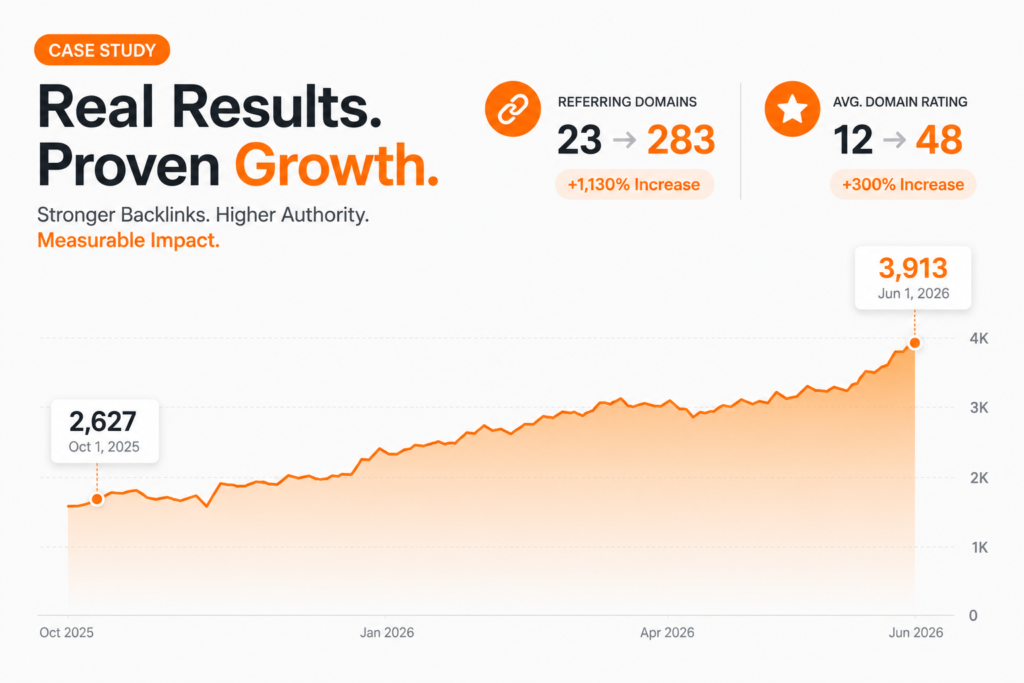
Every placement is negotiated by a person with an editor who runs a blog people actually read. We price by verified monthly traffic, because domain rating is the number that is easiest to fake and the one every other agency bills you for.

Pick a tier to see what it costs and what lands. Every placement is a real blog with a real readership — no networks, no reposts.
Best value for commercial terms. Established blogs with steady organic traffic and editors who actually reject submissions.
Order this tier →Pick a tier to see what it costs and what lands. Every placement is a real blog with a real readership — no networks, no reposts.
A starting point for brands with little authority yet. Real blogs, modest reach, and a profile that looks earned rather than bought.
Order this tier →Pick a tier to see what it costs and what lands. Every placement is a real blog with a real readership — no networks, no reposts.
The volume tier. Enough authority to move mid-competition keywords, at a price that lets you build a consistent monthly cadence.
Order this tier →Pick a tier to see what it costs and what lands. Every placement is a real blog with a real readership — no networks, no reposts.
High-trust placements on blogs with a ranking history of their own. Slower to secure because the editorial bar is genuine.
Order this tier →Pick a tier to see what it costs and what lands. Every placement is a real blog with a real readership — no networks, no reposts.
Industry-leading blogs with engaged readerships. These placements send referral traffic as well as ranking signal.
Order this tier →Pick a tier to see what it costs and what lands. Every placement is a real blog with a real readership — no networks, no reposts.
Heavyweight placements for sites that already rank and need a step change. Limited availability each month.
Order this tier →Blogger outreach means contacting real bloggers and publishers in your niche, pitching something they want to publish, and earning a contextual link inside the body of the post. The publisher chooses to run it. That editorial choice is the whole reason the link carries weight.
It is slower than buying inventory, and that is the point. A marketplace listing sells the same page to whoever pays next. A private blog network exists only to pass links. Neither survives an algorithm update, because neither has readers.
Outreach links arrive with an audience attached. They get read, clicked and cited, so they carry ranking signal and referral traffic at once, and they keep carrying both long after the campaign ends.
Five stages, run by people. You see the prospect list before we send a single email, and seven in ten prospects never make it that far.
We map the blogs your buyers already read, then score each one for topical fit and for traffic we can verify in two tools.
Every email is written for one editor and references their actual coverage. No sequences. No blasts. Roughly one in four replies.
We agree the angle, the placement and the anchor with the publisher before a word gets written, so nothing comes back needing a rewrite.
Our writers produce something the blog's own readers would finish, with your link sitting where a reader would expect to find it.
The link goes live, we confirm it is indexed, and the URL lands in your report with its DR, traffic and anchor attached.
A sample of live links earned for clients in the last twelve months. Publishers under NDA are described by category, never invented.
Six outcomes clients come back for, in the order they usually arrive.
Each earned placement makes the next pitch easier, so a programme accelerates where a one-off purchase plateaus and then decays.
Readers of a niche blog are already in-market, so the clicks arrive warmer than paid traffic and they start before any ranking moves.
Links a human editor chose to publish are the ones still passing value after an update, because there is no footprint to detect.
Your name shows up where your buyers already spend attention, on a page with readers instead of a page built to hold links.
Nothing bought from a network, nothing that needs disavowing in a year, nothing you have to explain to the next SEO who audits you.
Answer engines quote sources they already trust. Editorial coverage on a read blog is how you become one of those sources.
Every agency claims manual outreach. Here is one of ours, with the parts that make an editor reply marked up.
Hi Maya,
Your March piece on SaaS churn is the only benchmark post I have found that separates voluntary from involuntary. One thing: the 5.6% figure in the second table is from the 2023 survey, but the chart above it runs on 2025 data.
I write for [client] and we pulled the same split across 340 accounts. Happy to write it up for your readers. 900 words, your format, no fee. One link back to our results page, nothing else.
If it's not a fit, no follow-up from me. Either way, worth fixing that row.
— Sam
Not "love your content." A specific table, a specific figure in it, and a specific problem with that figure. An editor can spot a merge field from the preview pane, and most of them do.
Original data, written to their format, at no cost to them. The link is named in the same breath as the offer, so nobody feels ambushed after they have already said yes.
One send. No four-email sequence, no "just bumping this to the top." That single line is why editors who said no in 2024 still open our emails in 2026
We have existing publisher relationships in the niches where editors are hardest to reach.
Link building compounds. The brands that win treat it as a programme, not a purchase. We would sooner set that expectation now than apologise for it in month two.
We review your profile and your competitors, build the target list, and agree the pages and anchors we are going after with you.
Personalised pitches go out and replies come back. The first angles and anchors get agreed directly with the editors who said yes.
Placements publish, we verify indexing and link attributes, and your report starts filling with URLs you can open and check.
Target pages start climbing and referral traffic arrives, and each new pitch lands a little easier than the one before it did.
Three situations where we would tell you to spend the money elsewhere, or not spend it with us at all.
Buy link insertions instead. Outreach moves at the speed an editor answers email, and anyone quoting you a guaranteed two-week turnaround on an earned placement is selling inventory with a better name on it.
We cannot promise that, and neither can anyone honest. An editor is allowed to say no, and roughly a quarter of the pitches we send get one. If a named publication is non-negotiable, digital PR is the closer bet.
We are not it. There are placements on this search result at $40, and a thin spread of cheap links moves nothing, so you conclude link building does not work when what did not work was the budget.
Contacting real bloggers and publishers in your niche, pitching something worth publishing, and earning a contextual link inside the body of the post. The publisher decides whether to run it, and that editorial choice is what gives the link its weight.
Guest posting is one possible outcome of outreach. Blogger outreach is the relationship-led process behind it, and the result might be a guest article, a mention in a roundup, or a link added to coverage the blog already published. Different sourcing, different price, different position on the page.
Prospects are sourced by topic, then screened for verified organic traffic, topical fit at page level, spam signals and outbound-link hygiene. Roughly seven in ten are rejected, most of them on traffic, and you see the surviving list before we send anything.
Because domain rating can be inflated and monthly readership cannot, not without someone noticing. A DR 40 blog with 30,000 real readers will do more for you than a DR 70 blog with none, and we would sooner bill you for the first one honestly.
Do-follow unless a publisher's policy says otherwise, which we agree with you in advance. Every placement is monitored and replaced free if it comes down inside twelve months, which happens to a small share of links on any campaign.
Price follows the verified readership of the publisher. Six bands are listed near the top of this page with no minimum contract. Across this market, expect anywhere from $72 to $600 per placement depending on the blog.
First placements typically go live in month two, with ranking movement from month three. Authority compounds, so the curve steepens the longer the programme runs and the earlier placements keep working.
Yes. Our writers produce the article or the section your link sits in, matched to the publisher's editorial standards, and you approve it before it goes anywhere near an editor.
Yes. Every link is manually earned and editorially placed on a real site with real readers. No PBNs. No link farms, and no marketplace inventory that a competitor can buy tomorrow.
Yes. You approve the prospect list before a single email goes out, and nothing gets pitched to a publisher you have not signed off on. Most clients cut two or three from a list of thirty.
Send us your target pages and we'll come back with the publishers we'd go after, the tier they sit in, and what it would cost.
Book a Strategy Call → Email the team