You can’t run ads. Organic is your primary growth engine. We build high-impact editorial backlinks and hand over a transparent campaign report showing your live placements, acceptance rate, and full rejection list.
Pick a tier to see what it costs and what lands. Cannabis rates run above mainstream niches because most publishers refuse the category outright, and the ones that accept it know it.
Best value for commercial terms. Established sites with steady organic traffic and editors who genuinely reject submissions.
Order this tier →Pick a tier to see what it costs and what lands. Cannabis rates run above mainstream niches because most publishers refuse the category outright, and the ones that accept it know it.
A starting point for brands with no authority yet. Real sites, modest reach, and a profile that looks earned rather than bought.
Order this tier →Pick a tier to see what it costs and what lands. Cannabis rates run above mainstream niches because most publishers refuse the category outright, and the ones that accept it know it.
The volume tier. Enough authority to move mid-competition keywords at a price that supports a consistent monthly cadence.
Order this tier →Pick a tier to see what it costs and what lands. Cannabis rates run above mainstream niches because most publishers refuse the category outright, and the ones that accept it know it.
Best value for commercial terms. Established sites with steady organic traffic and editors who genuinely reject submissions.
Order this tier →Pick a tier to see what it costs and what lands. Cannabis rates run above mainstream niches because most publishers refuse the category outright, and the ones that accept it know it.
High-trust placements on sites with a ranking history of their own. Slower to secure because the editorial bar is real.
Order this tier →Pick a tier to see what it costs and what lands. Cannabis rates run above mainstream niches because most publishers refuse the category outright, and the ones that accept it know it.
Industry-leading publishers with engaged readerships. These placements send referral traffic as well as ranking signal.
Order this tier →Pick a tier to see what it costs and what lands. Cannabis rates run above mainstream niches because most publishers refuse the category outright, and the ones that accept it know it.
Heavyweight placements for brands that already rank and need a step change. Availability is limited every month.
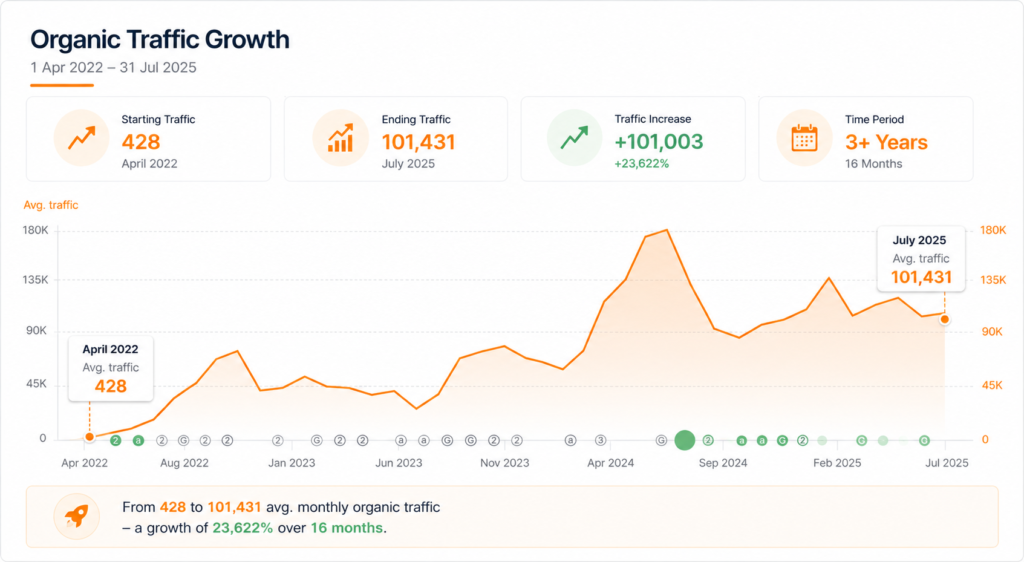
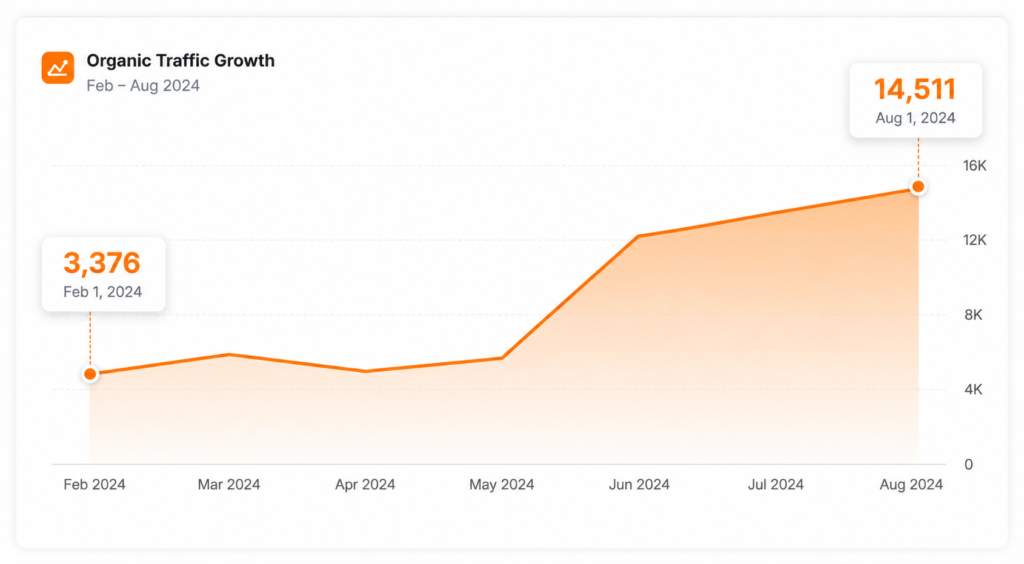
Order this tier →Not a portfolio of one-off campaigns. Two of these accounts have been running since 2022, in a category where most agency relationships end inside a year.
These aren't one-off campaigns. Two of these brands have been with us four years — in a vertical where most agency relationships last six months. Retention is the number worth reading here.
Every major paid channel restricts cannabis and CBD advertising. For most brands in this category, organic search isn't one channel among several.
For most cannabis and CBD brands, paid acquisition is largely closed off. That means organic search carries a share of growth it simply wouldn't in another industry, and a ranking drop lands on revenue with nothing to cushion it.
And because the whole category competes for the same constrained pool of willing publishers, authority becomes the deciding variable rather than a supporting one. Whoever earns the links that are actually available wins the category.
Cannabis link building is earning backlinks to cannabis, CBD and hemp sites from the publishers that accept the category, in a market where most mainstream sites decline it on policy grounds. That refusal is the whole constraint. Supply is a fraction of a mainstream niche, and everything about sourcing and pricing follows from it.
CBD link building is the same discipline applied to a narrower category. Hemp-derived CBD has the widest publisher acceptance in cannabis, so a CBD campaign usually has more volume available to it than a THC one. We quote them differently for that reason.
Scarcity creates a market for shortcuts and this category is full of them. Private networks, recycled expired domains, link farms built specifically to sell into cannabis, and marketplaces reselling all three. They move rankings briefly. Then they stop, and the cleanup costs more than the links ever returned. We do not place them, and the rejected-sites list exists so you can check that instead of trusting it.
Fewer publishers will say yes to you than to almost any other business. Our job is knowing which ones will for your specific product, getting content past their editors first time, and proving afterwards that the link is real.
Where your product sits changes which publishers will run it, how long a campaign takes, and what it costs. These are the six we work in, ordered by how much supply there is.
Hemp-derived CBD carries the broadest acceptance in the category, and most wellness and lifestyle publishers will run it. This is where the placement volume actually is.
The hardest placement in the category. Far fewer publishers will run it, the cost per placement is higher, geography matters much more than it does for CBD, and the ceiling is real. We will tell you the realistic ceiling before you commit.
A moving regulatory picture that publishers treat cautiously, so the sourcing list is narrower and changes over time.
A moving regulatory picture that publishers treat cautiously, so the list is narrower than CBD and it changes. We re-verify acceptance on this list more often than any other.
Software, packaging, compliance, point of sale. Not plant-touching, so mainstream business and tech publishers treat you as an ordinary B2B company. Campaigns move fastest here and cost the least.
Regional relevance matters as much as raw authority here, so the work is local publishers and citations instead of national authority. Different deliverable, and a different page.
Paid reach in this category is narrow and expensive, and what is open to you depends on exactly which of those six you are in. That is why organic carries more weight here than it does anywhere else, and why the category you sit in decides the whole plan. Of the publishers we approach, roughly 13% accept ancillary, 35% accept CBD, and 45% accept plant-touching THC.
Six constraints that shape every campaign in this category, and that most agencies discover halfway through one.
Most quality sites decline cannabis on policy grounds before they read the pitch. Supply is a fraction of a mainstream niche, and it is that way on day one.
Editors will run your research summary and refuse your product page. Authority arrives where it does not convert unless somebody planned the internal path in advance.
Content cannot say what marketing teams usually want it to say. That rules out most standard pitches and narrows the angles that will actually get published.
Legality and publisher willingness vary by product type and by market. Authority does not transfer cleanly. One profile will not serve everything you sell.
Scarcity has produced a large trade in network and recycled-domain links. Your competitors' profiles are a bad model to copy, and copying them is how brands inherit a problem.
Verification walls and geo-blocking can interfere with crawling when they are implemented carelessly. We check this during the audit, and it is a common finding.
It starts with an audit of what you already have, because most brands in this category have bought something they now regret.
Existing links reviewed for network and toxic placements, and your age gate and geo-blocking checked for crawl interference. You keep the findings whether or not you hire us.
Publishers that accept your specific product type in your markets. CBD, delta-8 and THC are three separate lists, and kratom is a fourth. Nothing comes off an inventory sheet.
Readership verified against two tools, network footprints screened, outbound profiles checked. Most candidates fail. You get the failures with the reason attached, which is the part nobody else sends.
The vetted sites come to you before we pitch anybody. Strike any you do not want and we will not place there. It is a veto, not a formality.
Written to publish first time, against the publisher's guidelines and our own claim policy. No health claims, no drafts bounced back, no weeks lost to a legal review nobody scheduled.
Live, indexed and documented with readership and anchor and date. The report format below is the actual deliverable, and the rejection log ships with it.
Rejected copy is the most expensive failure mode in this category, and every brand that has run outreach before has been burned by it. This is our editorial policy, in the specific.
Nothing our writers publish will say your product treats, cures, prevents or diagnoses any condition. Not softened, not implied, not attributed to an unnamed study.
Written for the audiences a publisher is permitted to reach. A draft that ignores this falls at the first policy check, before an editor has read a line of it.
Legality differs by state and country, and content reflects that rather than assuming a single national position.
Hemp-derived CBD, THC and novel cannabinoids described precisely rather than interchangeably. Editors in this space notice.
Each site's own content rules read before we write, not after a rejection costs you two weeks.
Sponsored or partnership labelling applied wherever the publisher or platform requires it.
This describes our content practice, not legal advice. Confirm your own requirements with counsel.
The most useful thing a client can tell you here is how long they've stayed.
"We're in our fourth year with them. In this industry that sentence is the whole review."

"They knew what our content couldn't say before our own legal team flagged it. Nothing has come back on us in three years."

"We can't run ads, so search is everything. They're the only agency we've used that treated that as the stakes rather than a talking point."

The same three tests we apply to every link we build, read for a category where the shortcut sellers outnumber the real publishers.
Cannabis, wellness, lifestyle or a genuinely adjacent editorial context. A CBD link dropped into an unrelated blog is the clearest footprint there is, and it's what most cheap category inventory looks like.
Verified organic traffic and a clean outbound profile, not DR alone. DR is the easiest metric in this category to manufacture, and the network sellers manufacture it constantly.
Editorial placement, anchors diversified deliberately across the campaign, and disclosure applied wherever the publisher requires it.
Built to be checked, not skimmed. This is the actual format, anonymised.
The three ways to buy cannabis links, on the criteria that decide whether the profile holds up.
Earning backlinks to cannabis, CBD and hemp sites from publishers that accept the category, in a market where most mainstream sites decline it outright. Because paid advertising is largely closed to these brands, organic authority carries a share of growth it wouldn't in any other industry.
Same discipline, narrower category. Hemp-derived CBD has the widest publisher acceptance in cannabis, so CBD campaigns usually have more placement volume available than THC ones — and we price them differently for that reason.
Both, with honest expectations. THC and novel cannabinoids face a much narrower publisher pool, so volume is lower and cost per placement is higher. We'll tell you the realistic ceiling before you commit rather than after three months of underdelivery.
No. Scarcity in this category has produced a large trade in network and recycled-domain links, and a lot of cannabis profiles are quietly full of them. Every site we place on is manually prospected and screened, and you receive the rejected-sites list with the reason each one failed.
A large share of quality publishers decline the category on policy grounds, so supply is a fraction of a mainstream niche and the sites that do accept it know exactly how scarce they are. The premium is the market rather than a markup, and it varies by product type — THC costs more than CBD for the same DR.
Yes, and it's the main reason our drafts get accepted first time. Content stays clear of disease, treatment and cure language, uses accurate product terminology, and follows each publisher's own guidelines before we write rather than after a rejection. Agencies who don't know the rules burn weeks on rewrites.
Yes. Dispensaries are local-intent businesses where local relevance matters as much as raw authority, so the strategy is different from a national ecommerce brand — regional publishers, local citations, and links that reinforce a specific geography.
First placements go live in weeks three to four, with measurable movement typically in months three to five. Our longest cannabis engagements are in their fourth year, and the compounding across that period is where the largest gains sit — the brands above didn't get there in one quarter.
Yes. Kratom isn't cannabis, but it sells into overlapping audiences and carries its own restrictions and its own publisher pool. Two of our longest-running clients are kratom brands, so the list already exists rather than needing to be built from scratch.
Send us your domain and top three competitors. We'll show you where their authority actually comes from — and what's worth building.